Beyond the Plate: The Cultural Soul of Indonesia’s Most Beloved Regional Dishes
Indonesia’s culinary landscape is a vibrant tapestry woven with history, tradition, and the rich diversity of its people. Each dish tells a story—not just of flavors and ingredients, but of the communities, rituals, and even legends that have shaped them. To truly savor these dishes is to embark on a journey through time, where every bite carries the essence of a culture far beyond the plate.
The Spice of Life: How History Shapes Flavor
Take Nasi Padang Minangkabau, for instance. This iconic dish from West Sumatra is more than just a spread of aromatic rice accompanied by an array of curries, meats, and vegetables. It is a reflection of the Minangkabau people’s matrilineal culture, where recipes and culinary traditions are passed down through generations of women. The communal style of serving—where dishes are laid out for everyone to share—mirrors the Minangkabau’s emphasis on togetherness and collective decision-making. The bold, spicy flavors are a testament to the region’s historical role as a hub for the spice trade, where chili, turmeric, and lemongrass were not just ingredients but symbols of prosperity and resilience.
Similarly, Ayam Taliwang Lombok is deeply intertwined with the Sasak people’s identity. This grilled chicken dish, marinated in a fiery blend of chili, garlic, and shrimp paste, is named after the village of Taliwang, where it originated. The dish is often prepared during communal gatherings and celebrations, serving as a centerpiece that brings families and neighbors together. The smoky aroma of the grilled chicken, mingling with the scent of coconut husks used as fuel, evokes the warmth of Lombok’s rural life, where food is a bridge between the past and the present.
Street Food as Cultural Narratives
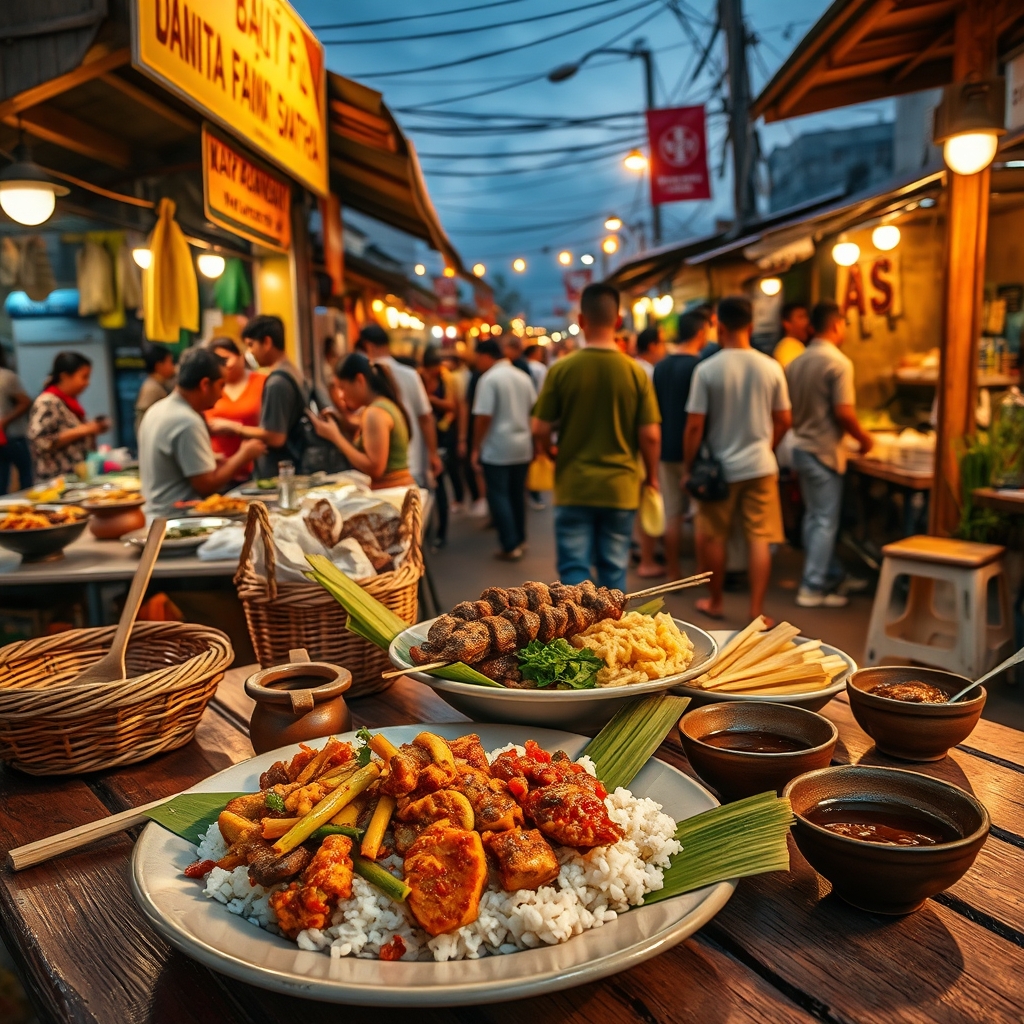
Indonesia’s street food scene is a living museum of its cultural diversity, where humble stalls and bustling markets offer more than just quick bites—they serve as gateways to understanding the soul of a region. Sate Klatak Bantul, a lesser-known but deeply cherished dish from Yogyakarta, is a perfect example. Unlike the more common satay varieties, Sate Klatak is made from goat meat skewered on iron rods, giving it a distinct, slightly metallic tang that locals swear by. The dish is said to have originated from the royal kitchens of the Sultanate of Yogyakarta, where it was prepared for special occasions. Today, it remains a symbol of the city’s rich Javanese heritage, often enjoyed with a side of gudeg (jackfruit stew) or krecek (spicy cow skin).
In Surabaya, Rawon Setan (literally “Devil’s Rawon”) is a dish that lives up to its name. This dark, brooding beef soup, colored by the use of keluak nuts, is served in the dead of night by street vendors who cater to the city’s nocturnal crowd. The dish’s mysterious allure is heightened by its reputation as a hangover cure, a remedy for late-night revelers. But beyond its edgy persona, Rawon Setan is a celebration of Surabaya’s multicultural history, blending Javanese, Chinese, and Arab influences into a dish that is as complex as the city itself.
The Rituals Behind the Recipes
Food in Indonesia is often tied to rituals and traditions that have been preserved for centuries. Bebek Sinjay Madura, a dish of duck cooked in a rich, spiced coconut broth, is traditionally served during selamatan, a Javanese ritual to express gratitude or seek blessings. The dish’s preparation is a labor of love, with the duck marinated for hours in a blend of turmeric, coriander, and candlenuts before being slow-cooked to perfection. The act of sharing Bebek Sinjay during these gatherings is a reminder of the importance of community and the role food plays in fostering connections.
In Aceh, Ayam Tangkap is more than just a dish—it is a culinary performance. The chicken, marinated in a fragrant mix of lemongrass, galangal, and turmeric, is fried to crispy perfection and then “captured” in a wok filled with fresh herbs like basil, mint, and torch ginger. The dish is often prepared for guests as a sign of hospitality, with the act of cooking it in front of them adding to the experience. The name “Ayam Tangkap” (which means “captured chicken”) is said to evoke the image of the chicken being “trapped” in a whirlwind of flavors, a metaphor for the warmth and generosity of Acehnese culture.
Modern Twists on Timeless Classics
While many of these dishes are steeped in tradition, they are also evolving to meet the tastes of modern palates. Mie Aceh Kepiting, a hearty noodle dish from Aceh, has seen creative adaptations in urban eateries, where chefs experiment with toppings like crab, shrimp, or even lobster. The dish’s signature spicy, coconut-based broth remains unchanged, but the variations reflect the dynamic nature of Indonesian cuisine, where tradition and innovation coexist harmoniously.
In Makassar, Coto Makassar Asli has transcended its humble origins as a street food staple to become a gourmet experience. This beef soup, slow-cooked with spices and served with ketupat (rice cakes), is now featured in upscale restaurants, where it is presented with a modern twist—think artisanal bread instead of traditional burasa (glutinous rice cakes) or a side of pickled vegetables for added freshness. Yet, no matter how it is served, Coto Makassar remains a dish that embodies the spirit of Sulawesi, where the sea and the land come together in a symphony of flavors.
As you explore Indonesia’s regional dishes, it becomes clear that food is more than sustenance—it is a language of its own, speaking volumes about the people, their history, and their way of life. Whether it’s the fiery heat of Sate Padang Pariaman, the comforting sweetness of Gudeg Yu Djum, or the bold, umami-rich depths of Pempek Kapal Selam, each dish invites you to look beyond the ingredients and savor the stories they carry. These flavors are not just meant to be tasted; they are meant to be experienced, remembered, and passed down, ensuring that the soul of Indonesia’s culinary heritage continues to thrive for generations to come.