The Spice-Driven Pilgrimage: Indonesia’s Regional Dishes That Map a Nation’s Soul
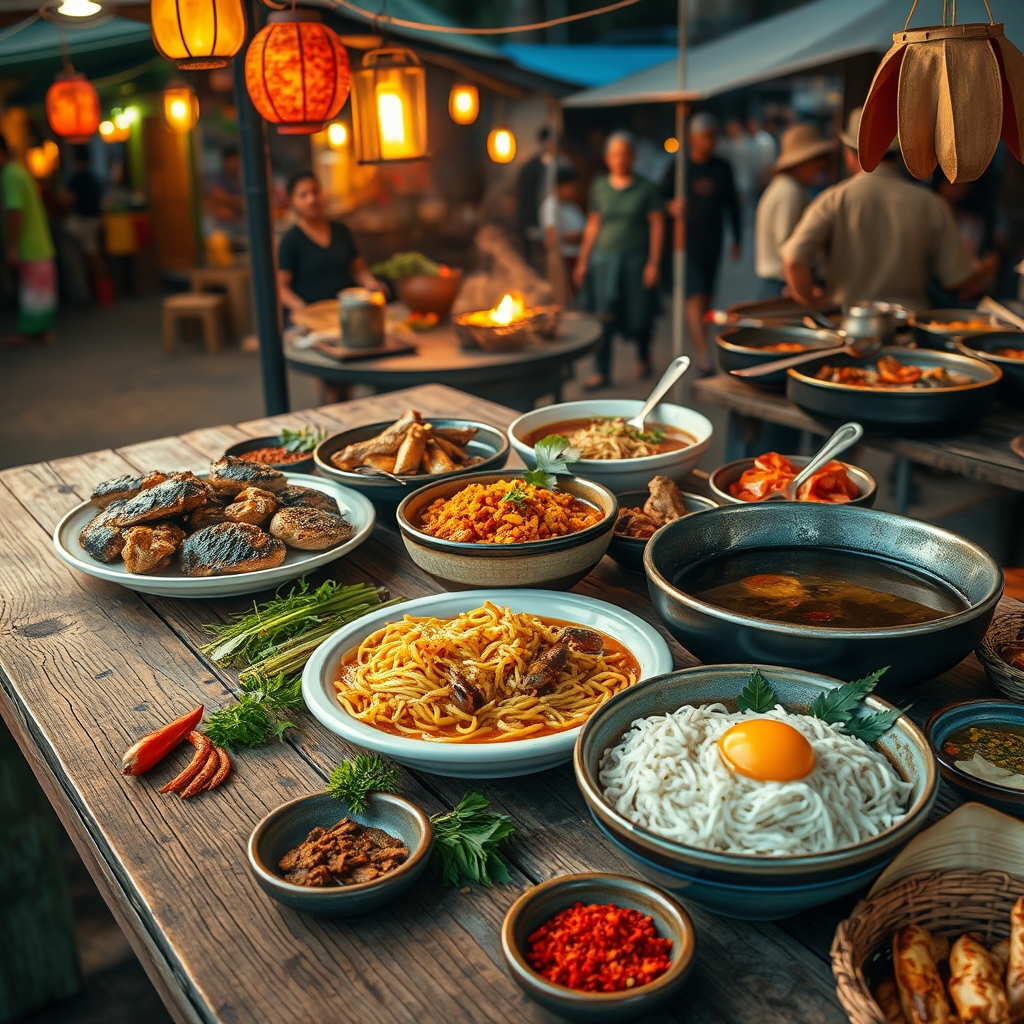
Imagine a country where every spoonful carries the weight of mountains, the whisper of coastal winds, and the echo of ancient trade routes. Indonesia’s regional dishes are not just meals; they are living maps, etched in spice, smoke, and time. Each bite is a pilgrimage, a journey through the archipelago’s diverse landscapes and cultures, where flavors tell stories of migration, resilience, and creativity. These dishes are not merely eaten—they are experienced, revered, and passed down like heirlooms.
The Fiery Embrace of Lombok: Ayam Taliwang
In the shadow of Mount Rinjani, the people of Lombok have perfected a dish that is as bold as the island’s volcanic soil. Ayam Taliwang is not for the faint of heart. Chicken, marinated in a paste of shallots, garlic, chili, and shrimp paste, is grilled over open flames until the skin crisps and the meat absorbs the smoky essence of the fire. The final touch? A generous slathering of *sambal* so fiery it could make a dragon weep. Served with plecing kangkung—a water spinach salad dressed in lime and chili—this dish is a testament to Lombok’s love affair with heat and simplicity. It’s a meal that doesn’t just fill the stomach; it awakens the soul.
The Sweet and Savory Symphony of Yogyakarta: Gudeg Yu Djum
In the cultural heart of Java, Gudeg Yu Djum stands as a monument to patience and tradition. Young jackfruit, slow-cooked for hours in palm sugar and coconut milk, transforms into a dish that is at once sweet, savory, and deeply comforting. The secret lies in the *gula jawa*—Javanese palm sugar—which caramelizes the jackfruit into tender, melt-in-your-mouth perfection. Served with steamed rice, crispy fried chicken, and a hard-boiled egg, Gudeg is more than a dish; it’s a ritual. It’s the kind of meal that demands to be eaten slowly, savored like a story unfolding with every bite.
The Devil’s Brew of Surabaya: Rawon Setan
Surabaya’s Rawon Setan is not for the timid. Named after the devil himself (*setan*), this black-hued beef soup is as intense as its reputation. The dark color comes from *keluak*, a nut indigenous to Indonesia, which lends the broth a rich, earthy depth. The meat, slow-cooked until it falls apart, is bathed in a broth spiked with lemongrass, galangal, and turmeric. The result is a dish that is both haunting and hypnotic, a flavor so complex it lingers long after the last spoonful. Eaten late at night under the glow of streetlights, Rawon Setan is a dish that thrives in the shadows, a culinary dare for those brave enough to take it on.
The Coastal Whispers of Aceh: Mie Aceh Kepiting
On the northern tip of Sumatra, where the Indian Ocean crashes against the shore, Mie Aceh Kepiting tells a story of the sea. Thick, chewy noodles are stir-fried with crab, shrimp, and a medley of spices that include turmeric, coriander, and chili. The dish is a celebration of Aceh’s maritime heritage, a fusion of flavors that reflects the region’s history as a crossroads of trade. The crab, sweet and succulent, is the star, but the noodles—thick and hearty—hold their own, soaking up the spiced broth until every strand is infused with flavor. It’s a dish that tastes like the ocean, like adventure, like home.
The Minangkabau Feast: Nasi Padang
No exploration of Indonesia’s regional cuisine would be complete without Nasi Padang, the iconic feast of the Minangkabau people. A mountain of steamed rice is served alongside an array of dishes—rendang, curries, fried fish, and vegetables—all arranged in small bowls that cover the table like a culinary mosaic. The beauty of Nasi Padang lies in its abundance. There is no menu, no order; you simply point and eat, mixing and matching flavors to create your own symphony. The rendang, slow-cooked beef in coconut milk and spices, is the crown jewel, but every dish has its own story, its own reason for being. It’s a meal that demands to be shared, a celebration of community and culture.
The Hidden Gems of the Archipelago
Beyond the well-trodden paths of Indonesia’s culinary fame lie dishes that are waiting to be discovered. In Solo, Nasi Liwet is a fragrant rice dish cooked in coconut milk and served with chicken, tempeh, and a hard-boiled egg, a meal that feels like a warm embrace. In Makassar, Coto Makassar is a rich beef soup thickened with ground peanuts, a dish that speaks of Sulawesi’s rich trading history. And in Manado, Klappertaart—a coconut custard cake—is a sweet reminder of the region’s Dutch colonial past. These dishes are not just food; they are fragments of history, pieces of a puzzle that, when put together, reveal the true soul of Indonesia.
To taste these dishes is to walk through Indonesia’s landscapes, to hear the stories of its people, and to feel the pulse of its culture. Each region offers a unique flavor, a distinct voice in the chorus of the archipelago’s culinary identity. These dishes are not just meals; they are invitations—to explore, to connect, and to fall in love with the rich, spice-laden tapestry that is Indonesia.