The Spice-Soaked Secrets: Indonesia’s Coastal and Highland Dishes That Hold the Archipelago’s Untold Flavors
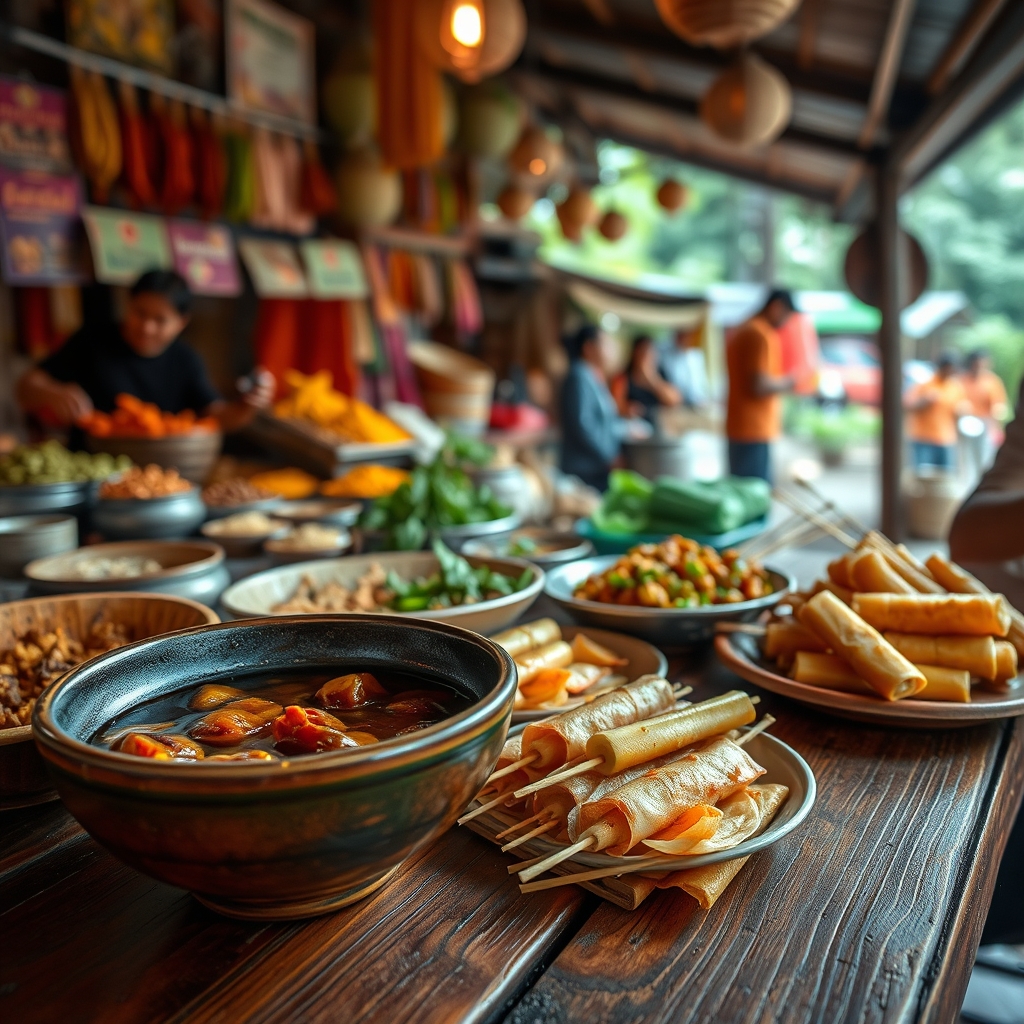
Indonesia’s culinary landscape is a vibrant mosaic of flavors, where each region crafts dishes that tell stories of trade, tradition, and terroir. Beyond the well-trodden paths of satay and rendang lies a world of lesser-known delicacies, each a testament to the archipelago’s rich cultural tapestry. These are the dishes that don’t just feed the body—they nourish the soul, carrying the whispers of generations and the fiery spirit of the land itself.
The Coastal Charms: Where Sea Meets Spice
Along Indonesia’s vast coastline, the ocean’s bounty intertwines with bold spices to create dishes that are as much a celebration of the sea as they are of the land. In Surabaya, Rawon Setan—a devilishly dark beef soup—simmers with the earthy depth of keluak, a nut that lends the dish its signature hue and a flavor that lingers like a secret. Nearby, Tahu Tek Surabaya offers a playful contrast: crispy tofu, boiled potatoes, and bean sprouts tossed in a peanut sauce so rich it feels like a warm embrace. The dish is a symphony of textures, each bite a reminder of the city’s love affair with simplicity and depth.
Further east, in the bustling streets of Sidoarjo, Kupang Lontong emerges as a humble yet unforgettable dish. Tiny clams, known as kupang, are simmered in a fragrant broth and served with compressed rice cakes, their briny sweetness balanced by the sharp tang of lime and the heat of sambal. It’s a dish that speaks of the sea’s generosity, a fleeting taste of the tides captured in a bowl.
The Highland’s Hidden Gems: Where Fire Meets Flavor
Venture into Indonesia’s highlands, and the flavors shift, mirroring the rugged landscapes and the resilience of the people who call these places home. In the heart of Solo, Nasi Liwet is a dish that feels like a hug from an old friend. Fragrant rice cooked in coconut milk and spices, often served with chicken, tempeh, and a sprinkle of fried shallots, it’s a dish that carries the warmth of Javanese hospitality in every grain. The aroma alone is enough to transport you to a bustling warung, where the air is thick with the scent of lemongrass and laughter.
In the highlands of Lombok, Ayam Taliwang reigns supreme—a dish so fiery it’s said to be named after the Taliwang district, where the chili peppers grow wild and free. Grilled chicken is slathered in a paste of shallots, garlic, shrimp paste, and bird’s eye chilies, then charred over an open flame until the skin crackles with promise. The first bite is a revelation: smoky, spicy, and utterly addictive, a dish that doesn’t just challenge the palate but demands its full attention.
The Street Food Chronicles: Where Tradition Meets Innovation
Indonesia’s street food scene is a playground of creativity, where age-old recipes are reimagined with a modern twist. In the bustling markets of Yogyakarta, Sate Klatak Bantul stands out as a dish that defies convention. Unlike traditional satay, these skewers are made with chunks of goat or lamb, grilled over coconut husks to impart a deep, smoky flavor. The meat is tender, almost buttery, and the accompanying sauce—a blend of sweet soy, shallots, and chilies—elevates it to something truly extraordinary. It’s a dish that feels both ancient and new, a bridge between the past and the present.
Meanwhile, in the coastal city of Makassar, Coto Makassar Asli is a dish that commands respect. A rich, slow-cooked beef soup, it’s flavored with a blend of spices that includes turmeric, coriander, and lemongrass, creating a broth that’s both hearty and aromatic. Served with ketupat (compressed rice cakes) and a side of sambal, it’s a dish that warms the soul, a reminder of the slow, deliberate art of Indonesian cooking.
The Sweet and the Savory: A Dance of Contrasts
Indonesia’s culinary repertoire isn’t just about heat and spice—it’s also a celebration of balance, where sweet and savory coexist in perfect harmony. In the streets of Semarang, Lumpia Semarang Rebung is a dish that delights the senses. These spring rolls are filled with bamboo shoots, chicken, and shrimp, their crispy exterior giving way to a filling that’s both tender and fragrant. Served with a sweet and tangy sauce, they’re a testament to the city’s Chinese-Indonesian heritage, a fusion of flavors that feels both familiar and exotic.
And then there’s Bika Ambon Medan, a dessert that’s as much a work of art as it is a treat for the taste buds. This honeycomb cake, with its golden-brown crust and spongy interior, is flavored with coconut milk and pandan, its sweetness tempered by a subtle tang. It’s a dish that feels like a celebration, a sweet ending to a meal that’s as rich in history as it is in flavor.
These dishes are more than just food—they’re a journey through Indonesia’s soul, a chance to taste the stories of the people who have shaped this archipelago’s culinary identity. Each bite is a reminder of the diversity that defines Indonesia, a land where every region, every community, and every kitchen has a story to tell. And perhaps that’s the true magic of Indonesian cuisine: it’s not just about the flavors on the plate, but the memories they evoke, the traditions they uphold, and the connections they forge. Whether it’s the smoky allure of Ayam Taliwang or the comforting embrace of Nasi Liwet, these dishes are a testament to the power of food to transcend borders and bring people together, one spice-infused bite at a time.