The Forgotten Spice Trails: Indonesia’s Coastal and Highland Dishes That Dance Between Fire and Tradition
Indonesia’s culinary landscape is a vast, untamed ocean of flavors, where every island, every village, and every street corner tells a story through its food. While dishes like rendang and satay have earned global acclaim, there exists a treasure trove of regional delicacies that remain hidden in plain sight, waiting to be discovered by those willing to venture beyond the familiar. These are the dishes that carry the whispers of ancient spice routes, the resilience of coastal communities, and the quiet pride of highland traditions—flavors that dance between fire and heritage, between the sea and the soil.
The Fiery Embrace of Lombok’s Ayam Taliwang
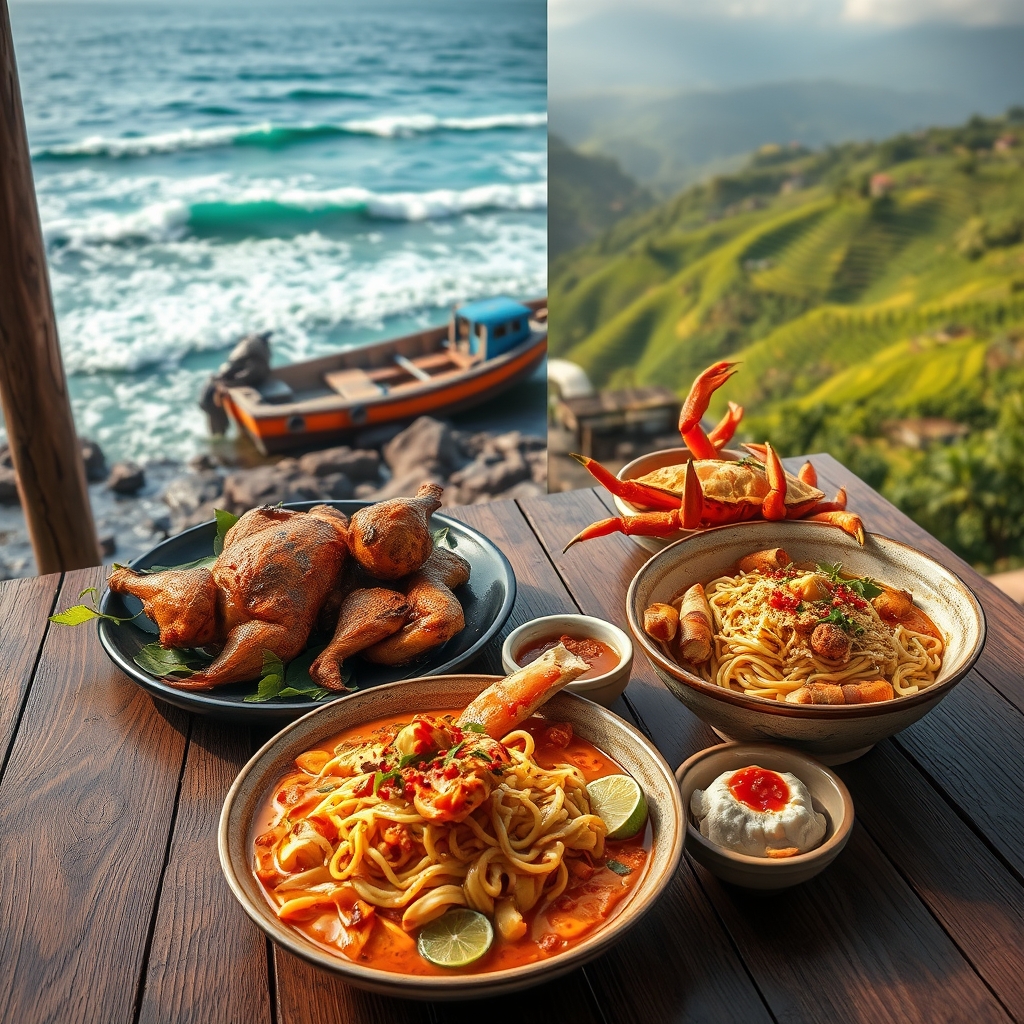
In the shadow of Mount Rinjani, the island of Lombok offers one of Indonesia’s most intoxicating culinary experiences: Ayam Taliwang. This dish is not for the faint of heart. Chicken is marinated in a paste of shallots, garlic, chili, and shrimp paste, then grilled over an open flame until the skin crisps and the meat absorbs the smoky essence of the fire. The final touch? A generous drizzle of *plecing* sauce, a fiery concoction of chili, lime, and tomato that sets the palate ablaze. Ayam Taliwang is more than just a meal; it’s a rite of passage for those who dare to embrace the heat of Lombok’s culinary soul.
The Coastal Whispers of Mie Aceh Kepiting
On the northern tip of Sumatra, where the Indian Ocean crashes against the shores of Aceh, a dish of humble origins tells a story of maritime resilience. Mie Aceh Kepiting, or Acehnese crab noodles, is a symphony of textures and flavors. Thick, chewy noodles swim in a rich, spiced broth infused with turmeric, lemongrass, and galangal, while succulent crab meat adds a touch of the sea’s bounty. The dish is often served with a side of *emping* (crispy melinjo crackers) and a wedge of lime, allowing diners to customize each bite. It’s a dish that speaks of Aceh’s history as a trading hub, where spices from distant lands met the freshest catches of the day.
The Highland Comfort of Nasi Liwet Solo
In the heart of Java, where the air is cooler and the pace of life slower, Nasi Liwet Solo offers a comforting embrace. This fragrant rice dish is cooked in coconut milk and chicken broth, infused with lemongrass, pandan leaves, and a hint of garlic. It’s typically served with a variety of side dishes, from tender chicken to crispy tempeh, and a generous helping of *sambal goreng* (spicy fried condiment). Nasi Liwet is more than just a meal; it’s a celebration of Javanese hospitality, a dish that brings families together and warms the soul on even the chilliest of evenings.
The Mysterious Depths of Rawon Setan Surabaya
Surabaya’s Rawon Setan is a dish shrouded in legend. Named after the devil (*setan*) for its dark, almost sinister appearance, this beef soup gets its deep black hue from the use of *keluak*, a nut native to the mangrove swamps of Indonesia. The broth is rich and earthy, with a complex blend of spices that includes coriander, cumin, and turmeric. Served with a side of rice, bean sprouts, and a hard-boiled egg, Rawon Setan is a dish that demands to be savored slowly, each spoonful revealing new layers of flavor. It’s a testament to Surabaya’s reputation as a city of bold, unapologetic tastes.
The Sweet and Savory Harmony of Bika Ambon Medan
Medan’s Bika Ambon is a dessert that defies expectations. Despite its name, which suggests a connection to Ambon, this honeycomb cake is a proud product of North Sumatra’s culinary creativity. Made from a batter of eggs, sugar, coconut milk, and tapioca flour, Bika Ambon is baked until it develops a golden, spongy texture with a caramelized crust. The result is a sweet, slightly chewy cake with a subtle hint of pandan or vanilla. It’s a dish that bridges the gap between sweet and savory, a perfect example of Indonesia’s ability to create harmony from contrasting flavors.
The Coastal Crunch of Kupang Lontong Sidoarjo
In the bustling streets of Sidoarjo, East Java, a humble dish of Kupang Lontong has captured the hearts of locals and visitors alike. This street food staple features tiny clams (*kupang*) served with compressed rice cakes (*lontong*), bean sprouts, and a tangy, spicy broth made from tamarind, chili, and shrimp paste. The dish is often garnished with fried shallots and a squeeze of lime, adding a burst of freshness to each bite. Kupang Lontong is a dish that embodies the spirit of Sidoarjo—a place where the sea’s bounty meets the creativity of street food vendors, resulting in a flavor explosion that’s as vibrant as the city itself.
These dishes are more than just food; they are living legacies, each one a thread in the rich tapestry of Indonesia’s culinary heritage. They remind us that the true magic of Indonesian cuisine lies not in its most famous exports, but in the hidden gems that await those willing to explore. Whether it’s the fiery embrace of Ayam Taliwang, the coastal whispers of Mie Aceh Kepiting, or the highland comfort of Nasi Liwet Solo, each dish offers a glimpse into the soul of the archipelago—a soul that is as diverse as it is delicious, as fiery as it is comforting, and as timeless as the stories it tells.