The Unspoken Language of Spice: Indonesia’s Regional Dishes That Speak Through Flavor
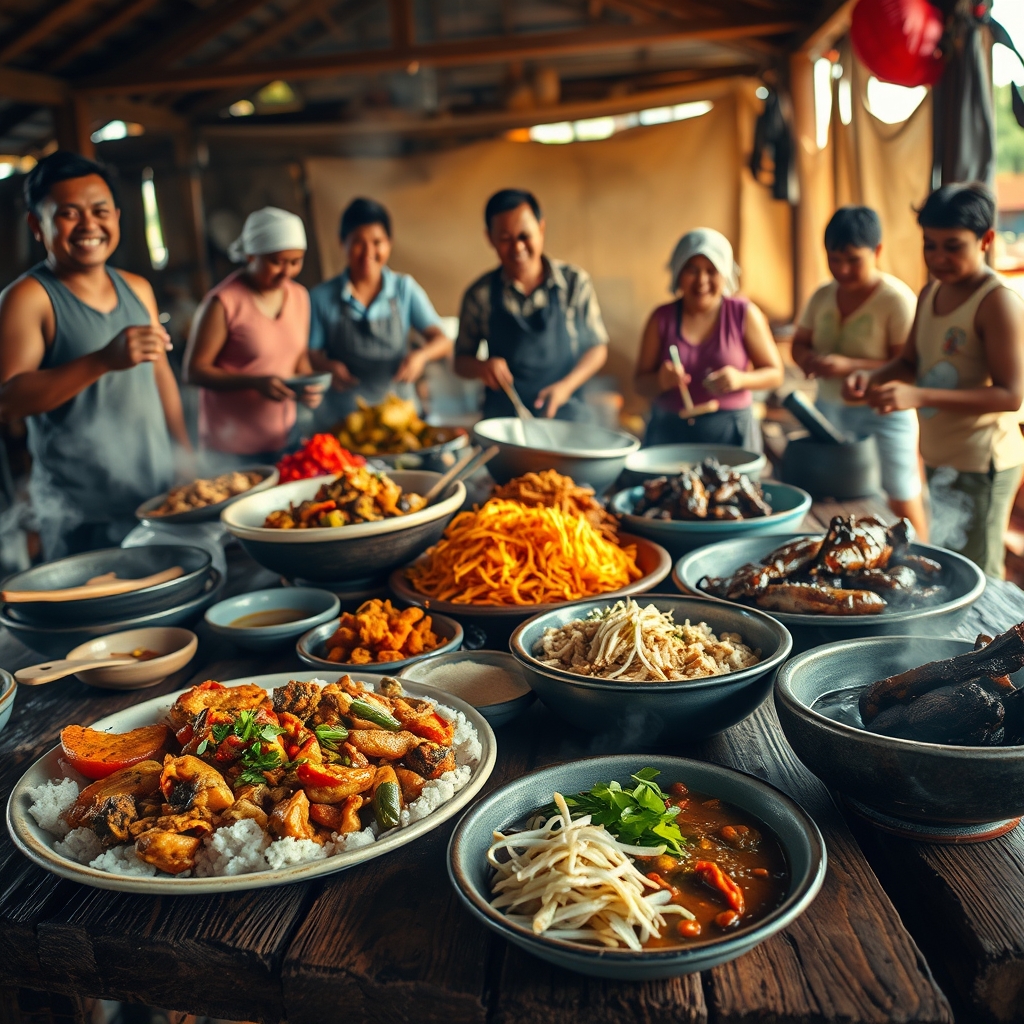
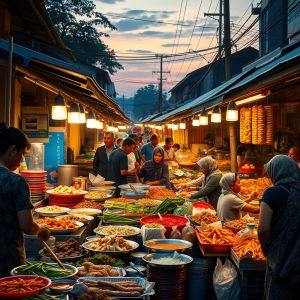
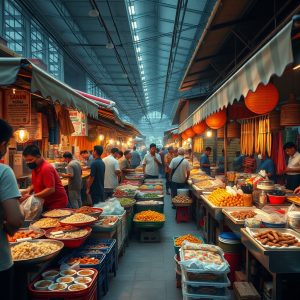
There is a quiet conversation happening across Indonesia, one that doesn’t rely on words but on the deep, resonant notes of turmeric, the sharp whisper of shallots, and the slow burn of chili that lingers like a half-remembered dream. It’s a dialogue carried in clay pots simmering over wood fires, in the sizzle of skewers hitting hot grates, and in the steam rising from bowls of broth that have been tended for hours, sometimes days. This is the language of regional Indonesian cuisine—a tongue of spice, memory, and place that tells stories not just of taste, but of identity.
The Soul in the Simmer
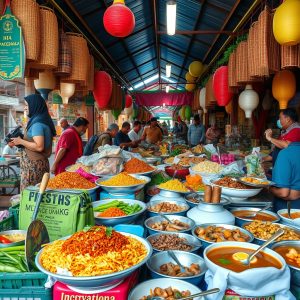
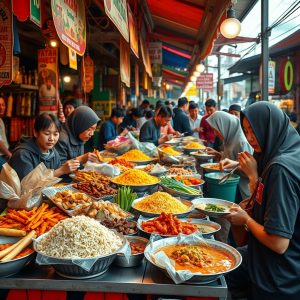
Take Nasi Padang Minangkabau, for instance. More than just a meal, it’s a performance. Plates of rendang, curried jackfruit, and spicy beef liver are stacked high on tables, a vibrant mosaic of colors and textures that invites you to reach out and take what calls to you. The Minangkabau people of West Sumatra believe that food should be shared, not just eaten, and so the meal becomes a communal act, a way of saying, “I see you, I welcome you.” The flavors are bold, layered with coconut milk and a paste of toasted spices that have been ground by hand, each bite a testament to patience and tradition.
Then there’s Gudeg Yu Djum from Yogyakarta, a dish that seems to defy logic. Young jackfruit, slow-cooked in palm sugar and coconut milk until it turns a deep, caramelized brown, should not be as addictive as it is. Yet the balance of sweet and savory, the tender bite of the fruit, and the rich, almost smoky aroma make it impossible to stop at one serving. Gudeg is often called the “food of patience,” not just because of its long cooking time, but because it teaches you to savor, to wait, to appreciate the alchemy of time and heat.
The Fire Beneath the Surface
Not all Indonesian dishes announce themselves with color. Some speak in heat, in the slow, creeping warmth that builds until it feels like your very soul is being seasoned. Rawon Setan Surabaya is one such dish. Named after the devil for its dark, almost sinister appearance, Rawon is a beef soup made with keluak nuts, which lend it a deep, earthy flavor and an inky black hue. The first spoonful might deceive you—it’s mild, almost gentle—but then the heat arrives, not all at once, but in waves, each one more intense than the last. It’s a dish that doesn’t just fill you; it challenges you, asks you to meet its fire with your own resilience.
Similarly, Ayam Taliwang Lombok is a dish that demands attention. Grilled chicken slathered in a paste of chili, garlic, and shrimp paste, it’s fiery, smoky, and unapologetically bold. The name itself comes from the village of Karang Taliwang, where the dish originated, and it carries with it the spirit of the Sasak people—fierce, proud, and unafraid to stand out. Eating Ayam Taliwang isn’t just a meal; it’s an experience, one that leaves your lips tingling and your heart racing.
The Comfort of the Familiar, the Thrill of the Unknown
Some dishes wrap around you like a warm embrace, offering comfort in their familiarity. Soto Banjar Kalimantan is one such dish. A fragrant chicken soup with turmeric, lemongrass, and a touch of cinnamon, it’s the kind of meal you crave on a rainy day, when the world outside feels too big and too cold. The broth is light but rich, the chicken tender, and the addition of fried shallots and lime gives it a brightness that cuts through the gloom. It’s a dish that feels like home, even if home is thousands of miles away.
On the other end of the spectrum is Mie Aceh Kepiting, a noodle dish that refuses to be ignored. Thick, chewy noodles are tossed with crab, shrimp, and a spice paste that includes everything from galangal to tamarind. The result is a dish that’s complex, fiery, and utterly addictive. It’s the kind of meal that makes you pause mid-bite, not because you’re full, but because you’re trying to memorize the flavors, to understand how something so simple can be so profoundly satisfying.
The Stories We Carry on Our Tongues
Every dish in Indonesia carries a story, whether it’s the tale of Pempek Kapal Selam from Palembang, a fishcake stuffed with egg and served with a tangy, sweet-sour sauce, or the legend of Bika Ambon Medan, a honeycomb cake said to have been inspired by the volcanic soil of North Sumatra. These stories aren’t just about food; they’re about the people who make it, the hands that have stirred, pounded, and kneaded for generations. They’re about the land itself—its rivers, its mountains, its coasts—and how those elements shape what ends up on the plate.
Even the names of these dishes tell a story. Sate Klatak Bantul gets its name from the sound the skewers make when they hit the grill—*klatak, klatak*—a rhythm that’s as much a part of the dish as the goat meat itself. Tahu Tek Surabaya is a symphony of textures: fried tofu, boiled potatoes, bean sprouts, and lontong, all drenched in a peanut sauce that’s equal parts sweet, spicy, and savory. The name itself means “tofu that’s cut,” a nod to the way the ingredients are chopped and mixed together, each piece playing its part in the final composition.
The Unseen Hands Behind the Flavors
What often goes unnoticed are the hands behind these dishes—the women stirring pots in open-air kitchens, the men tending grills in the early morning light, the children learning to grind spices just as their parents did. These are the unseen architects of flavor, the ones who understand that a dish isn’t just about taste, but about time, about care, about the willingness to let something simmer until it becomes more than the sum of its parts.
Consider Coto Makassar Asli, a beef soup from South Sulawesi that’s been simmered for hours, sometimes overnight, until the broth is rich and the meat falls apart at the touch. The spices—coriander, cumin, fennel—are toasted and ground by hand, a process that can take hours. The result is a dish that’s deeply comforting, a reminder that some things can’t be rushed, that some flavors are worth waiting for.
Or take Nasi Liwet Solo, a dish that’s as much about the ritual as it is about the food. Cooked in coconut milk and spices, the rice is served with chicken, tempeh, and a hard-boiled egg, all arranged on a banana leaf. It’s a dish that’s often served at celebrations, a symbol of abundance and togetherness. The act of eating it—using your hands, sharing from the same plate—becomes a way of connecting, of reinforcing bonds that go beyond words.
There’s a reason these dishes endure, why they’re passed down through generations, why they’re celebrated in homes and on street corners across the archipelago. It’s not just because they taste good—though they certainly do—but because they carry something deeper, something that can’t be replicated by a recipe alone. They carry the weight of history, the warmth of community, the quiet pride of a people who understand that food is more than sustenance. It’s a language, a story, a way of saying who we are and where we’ve been. And in a world that’s increasingly fast and fleeting, that’s a kind of magic worth savoring.